Decentralized vs custodial crypto casinos: what actually changes for the player
Compare · wallet against account
Big crypto casinos turn up on every list of decentralized casinos. Some have tokens, some have provably fair games, one started on a blockchain. None keeps your money in your own wallet. Here is the side-by-side: what you gain and give up on each side, platform by platform.
The honest version of this comparison isn't “decentralized good, custodial bad”. Both kinds of casino have a place, and plenty of players are better served by a good account casino than by a wallet and a gas fee on every roll. The point is to know which one you are using, because the risks are different and the marketing often blurs them.
Side by side
| On-chain platform | Custodial crypto casino | |
|---|---|---|
| Where your balance sits | Your wallet, or a contract | The operator's wallets |
| How a bet is recorded | A transaction anyone can read | A row in the operator's database |
| Where the result comes from | VRF, committed seed or data provider | The operator's RNG; provably fair on its own games |
| Identity checks | None at protocol level on wallet-first platforms | At the operator's discretion under its terms |
| Cost per bet | House edge or fee, plus gas | House edge only |
| Game library | Tens of games or sports markets | Thousands of studio slots and live tables |
| Support | Docs and community channels | Live chat |
| If the platform disappears | Your wallet balance stays; open bets depend on the contract | You depend on the operator paying out |
The account casinos on “decentralized” lists
We read each one's own help pages on 18 September 2026.
BC.Game Account casino
0.5/5decentralized
CustodySettlementOutcomeContractsAuditsOne operator wallet across casino and sportsbook. Its crash game runs on a chain of 10 million pre-generated SHA-256 hashes you can check afterwards.
Shuffle Account casino
0.5/5decentralized
CustodySettlementOutcomeContractsAuditsAccount balance after email verification. Seeds are HMAC-SHA256 with a hashed server seed; the SHFL token can be withdrawn to your own wallet.
Stake Account casino
0.5/5decentralized
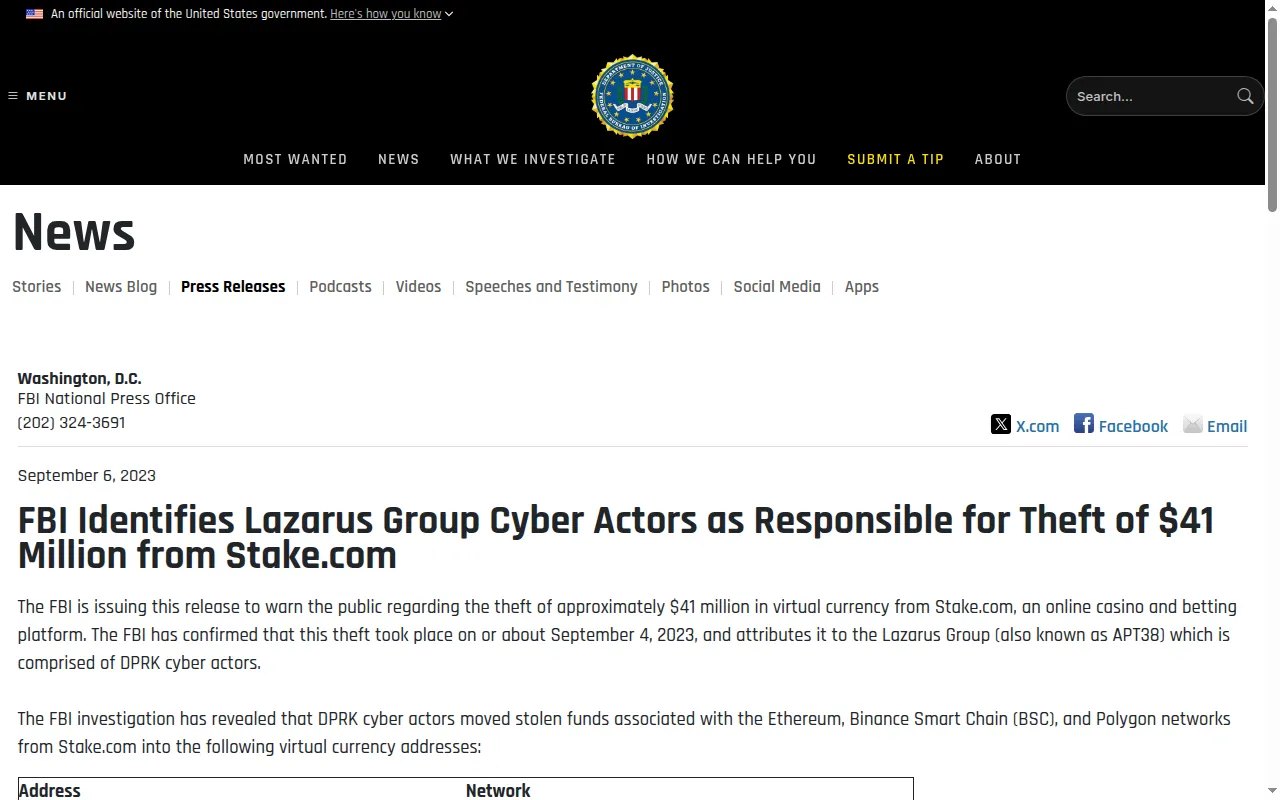
CustodySettlementOutcomeContractsAuditsDeposits go to a Stake address and sit in an account wallet. Provable fairness is claimed for Stake Originals. The FBI attributed a ~$41M hot-wallet theft on 4 Sep 2023 to Lazarus Group.
Sportbet.one Account casino
0.5/5decentralized
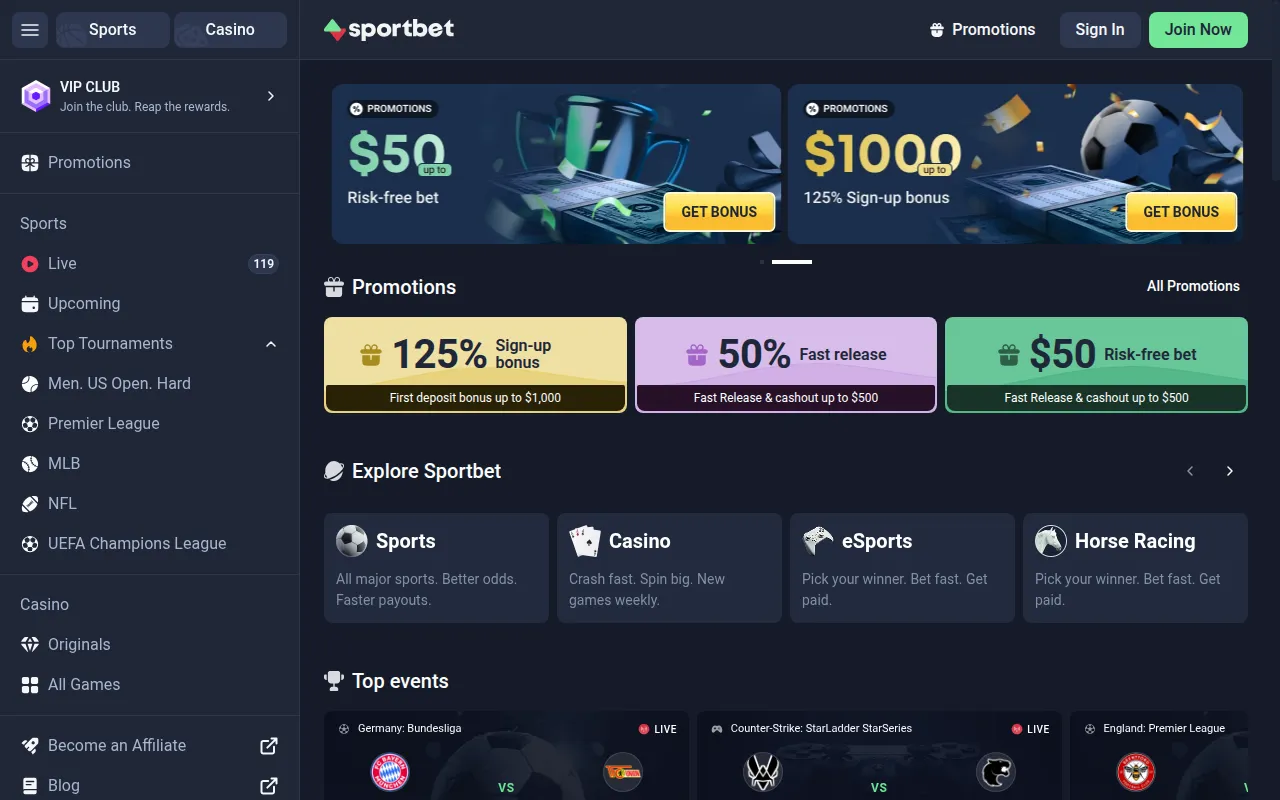
CustodySettlementOutcomeContractsAuditsStarted on EOS, now an ordinary crypto account with email or social login and 18 coins. Provably fair on some casino games.
TG.Casino Account casino
0/5decentralized
CustodySettlementOutcomeContractsAuditsA balance the operator credits and debits, played through Telegram. The TGC token pays stakers a share of profit; the game itself is not on-chain.
CoinPoker Account casino
0/5decentralized
CustodySettlementOutcomeContractsAuditsSays it keeps player funds in secure custody. Cards are shuffled by a certified RNG (Fisher-Yates), which you cannot verify yourself.
A few patterns stand out. Tokens aren't custody. Shuffle's SHFL is an ERC-20 you can withdraw to your wallet; Rollbit's RLB started on Solana in 2021 and later moved to Ethereum; TG.Casino's TGC pays stakers a share of profit in ETH. All three are real tokens on public chains. Your casino balance at each is still an account. Origins aren't custody either. Sportbet.one started as a dApp on EOS and now runs ordinary accounts with email or social login. Provably fair isn't custody. It proves a round wasn't altered, which is useful, and it is covered on where randomness comes from.
What you gain with an account casino
Speed and convenience. No gas per bet, so you can play small stakes quickly. Thousands of games from studios you know. A cashier that takes many coins and networks. Bonuses, cashback and VIP programmes. Someone to talk to in a live chat. For many players, that is worth giving up custody for the time their money is on the site.
What you give up
Custody, first. On or about 4 September 2023 about $41M was taken from Stake's hot wallets on Ethereum, BNB Smart Chain and Polygon, and the FBI attributed the theft to Lazarus Group. That is the risk custody creates: the operator's keys, the operator's security.
Second, the right to withdraw on your own terms. Account casinos write the conditions under which they can hold a payout: identity documents, source of funds, wagering a deposit before withdrawing it. Stake lists acceptable ID documents; Shuffle has a Level 2 identity step. None of that exists when your money never left your wallet.
What you gain with an on-chain platform
Custody and a public record. The money moves when you sign. Every bet is a transaction you can look up, and the contract follows the same rules for everyone. On Overtime, the random number for casino games comes from Chainlink VRF with a proof the contract checks. There is no document request at protocol level on wallet-first platforms.
What you give up
A big game library, live support and forgiveness for mistakes. Sign the wrong approval and nobody reverses it. Bridge to the wrong chain and you may wait days or lose funds. You also pay gas on every bet and, on some platforms, a protocol fee. And you take on contract risk: an audit lowers it, it doesn't remove it. Our smart contract audits page shows how few platforms name their auditors.
A middle path
Several platforms sit in between. JustBet signs you up by email but keeps balances in an on-chain escrow on Arbitrum. Dexsport lets you connect a wallet or take an internal one. Overtime and SX Bet let you log in with email or a social account while keeping custody with you through a smart account or proxy wallet. If you want on-chain settlement without managing a browser wallet, those last two are the ones to look at; the details are on who holds the money.
Choosing
If you already use a self-custody wallet and bet occasionally, an on-chain platform keeps things simple: your money stays with you. If you want slots, live tables and bonuses, a well-run account casino is the honest choice, and the thing to read before depositing is its withdrawal clauses. The full scored list is on the decentralized casinos ranking.