What went wrong: BetSwirl, ZKasino, Stake and what each one teaches
Compare · incidents
Three events show the three ways money gets lost around crypto casinos: a platform quietly winding down, a bridge that only worked one way, and an operator's hot wallet being emptied. Each one maps onto one of our checks.
Nobody writes guides about the platform that ran quietly for five years and paid everyone. The failures are where the checks on this site come from, so here are three, told from the sources, with the check that would have warned you.
BetSwirl: the app went, the contracts stayed
BetSwirl was about as decentralized as a casino gets. Dice, coin toss, roulette, keno, wheel and plinko ran in their own contracts on Arbitrum, Avalanche, Polygon, BNB Chain and Base. Each chain had a shared bank contract, and every roll used Chainlink VRF. You played from your own wallet.
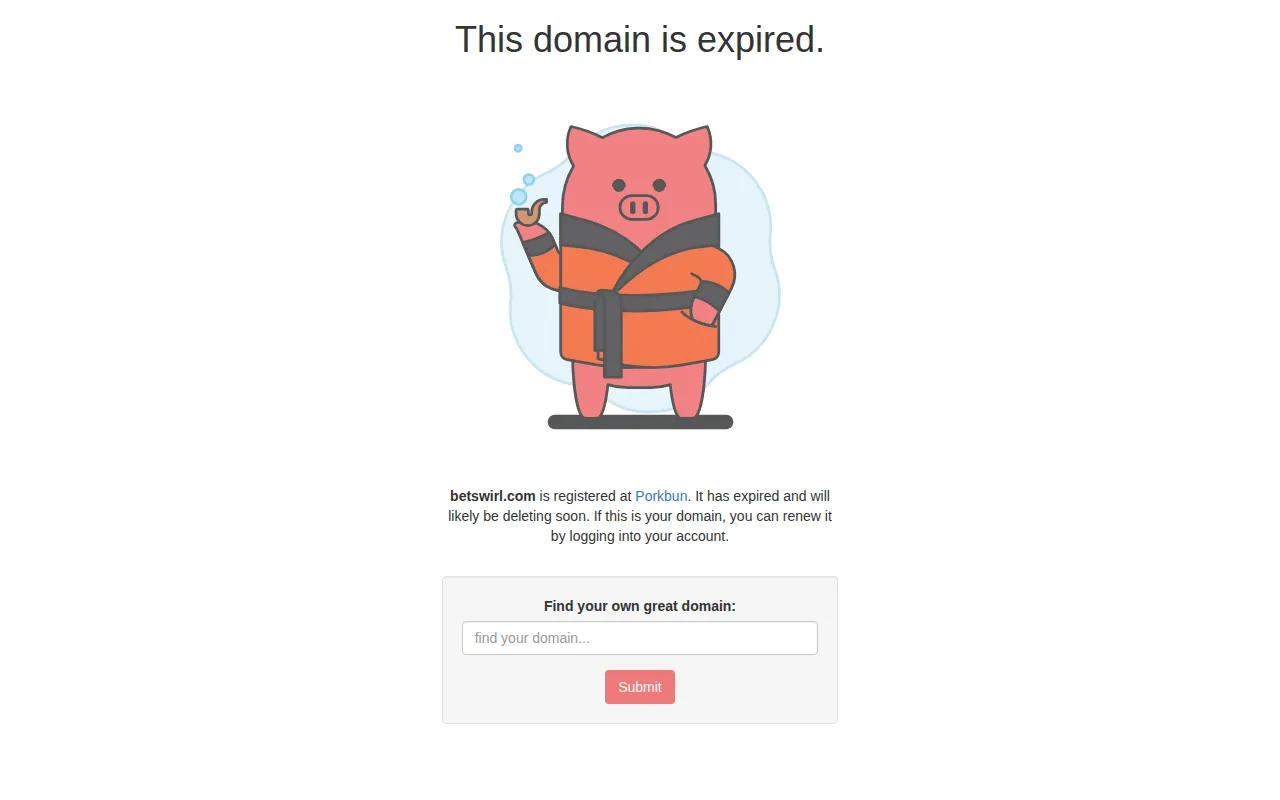
On 18 September 2026 betswirl.com, its www address and its docs all showed a registrar's “This domain is expired” page. The domain record showed a renewal two days earlier, but the site was still parked. On the explorers, the last Dice bets we found were on 20 March 2026 on Arbitrum and Polygon and on 22 March on Base. On 11 May 2026 the operator called the function that withdraws VRF fees from the Dice contract on Base, Arbitrum and Polygon. We found no announcement.
What it teaches. Self-custody did its job: players who held funds in their own wallets simply had nothing more to do there. What they lost was the front-end and any unfinished bet. The check that matters here is who holds the money. The second lesson is practical: a platform's liveness isn't in its contracts. Look at the latest bets on the explorer before you use it.
ZKasino: a bridge that only went one way
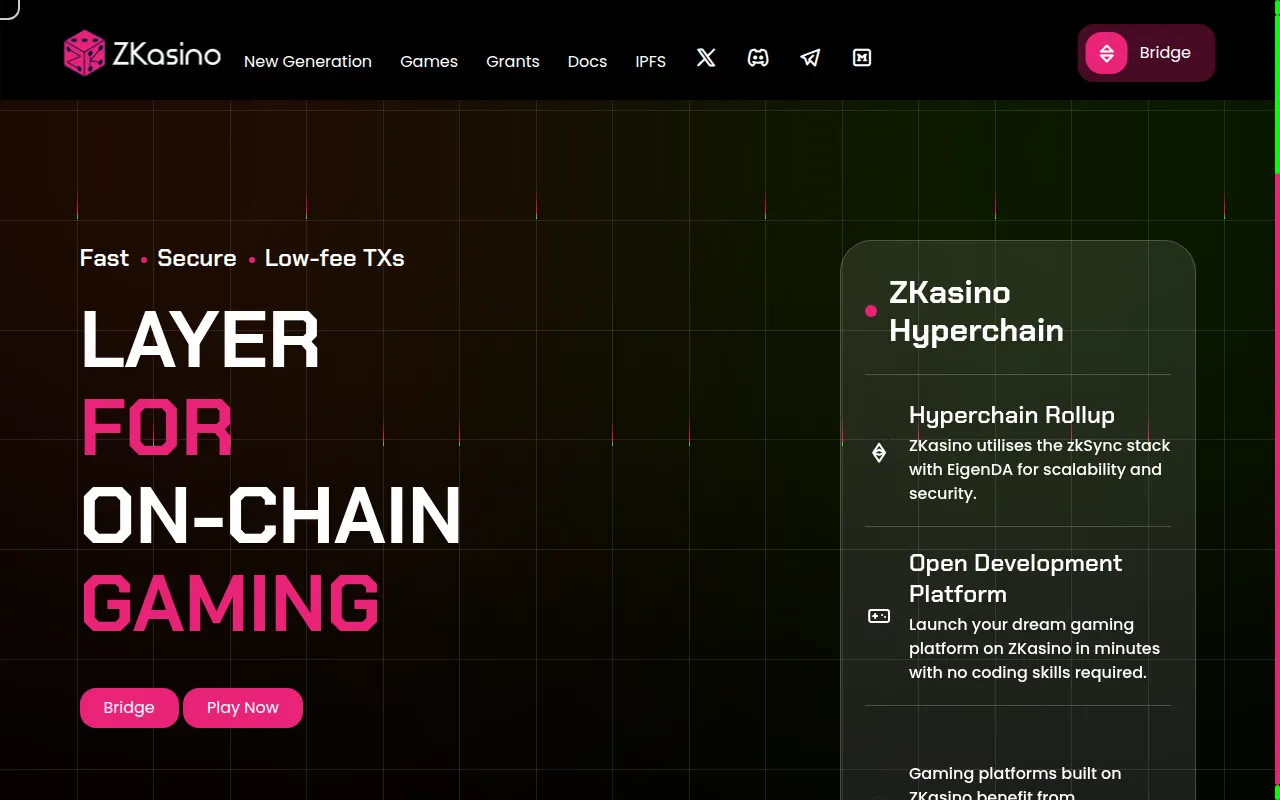
ZKasino promoted its own layer 2 for on-chain gaming and asked users to bridge ETH to it ahead of launch. More than 10,000 users deposited about $33M worth of ether to earn its ZKAS token. In April 2024 that ETH was converted into ZKAS and sent to Lido, as CoinDesk reported on 22 April. Users who expected their ETH back got the project's token instead. On 29 May 2024 CoinDesk reported that ZKasino was giving users 72 hours to retrieve their ether.
What it teaches. The problem wasn't a contract bug. It was a bridge into a chain the project controlled, with an exit that depended on the project's decisions. Audits wouldn't have caught it. The questions that would: how do I get out, and does leaving depend on the team? We ask both in the “five questions” on the decentralized casinos ranking. Any casino that needs you to bridge to its own chain first deserves extra caution.
Stake: $41M from the hot wallets
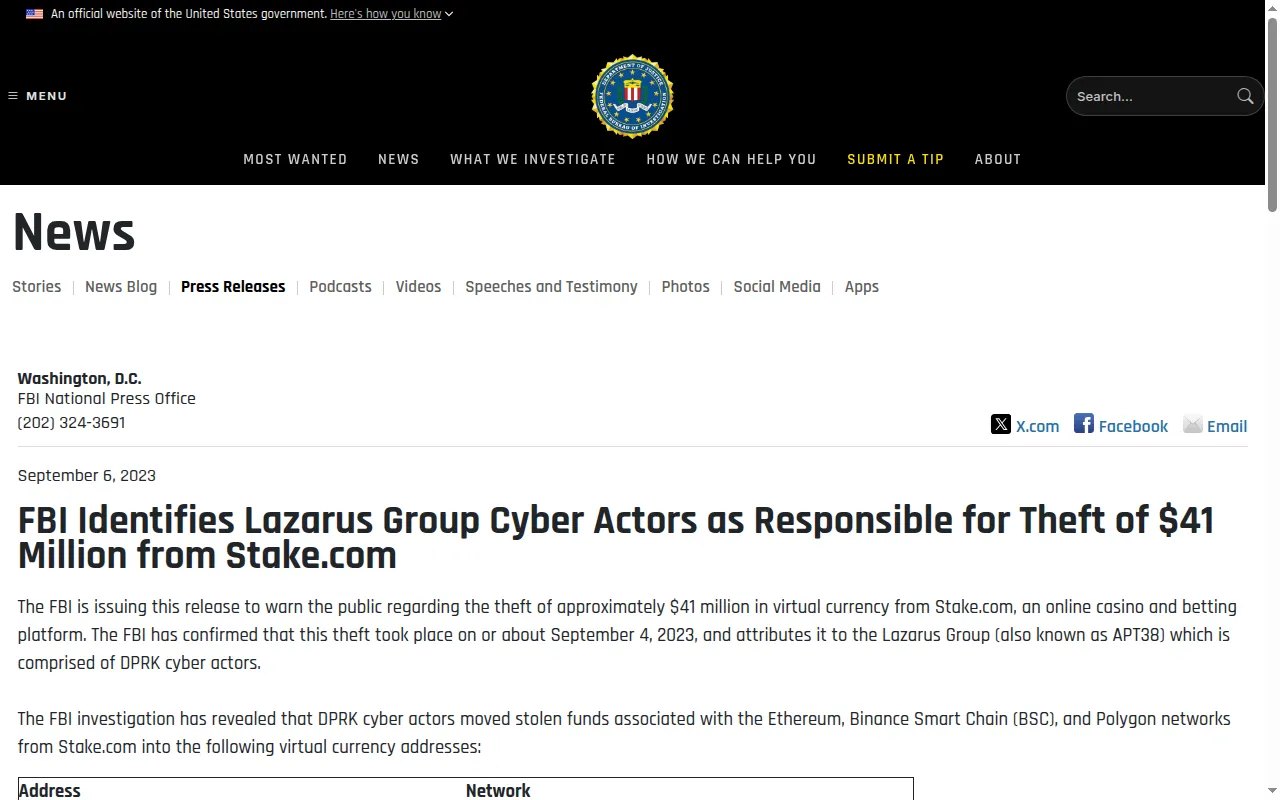
On or about 4 September 2023, about $41M in virtual currency was taken from Stake. The FBI confirmed the theft in a press release on 6 September and attributed it to Lazarus Group, the North Korean hacking group also tracked as APT38. The funds were taken from Ethereum, BNB Smart Chain and Polygon.
What it teaches. This is custodial risk at its plainest. A casino that holds player balances holds them in wallets whose keys it controls; if those keys are compromised, the loss is the operator's first. How that lands on players depends on the operator's reserves and choices, not on anything the player controls. Stake is not a decentralized casino and doesn't claim to be. It is here because it shows why the custody check comes first. The side-by-side is on decentralized vs custodial.
Projects that are simply gone
Older lists still include names that no longer lead anywhere. Chancer, still listed on some pages as an on-chain betting project, shows a website-builder placeholder on its domain. degen.bet is a parked domain for sale. Neither has anything left to check, which is itself the answer.
BetSwirl no longer live
Fully on-chain dice, roulette and plinko on five chains with Chainlink VRF. The domain shows a registrar's "expired" page; the last Dice bets we found were on 20–22 March 2026, and VRF fees were withdrawn on 11 May 2026. No statement from the team.
ZKasino no longer live
Took about $33M of bridged ETH from more than 10,000 users, converted it to its ZKAS token and sent it to Lido (CoinDesk, 22 April 2024); later opened a 72-hour window to take ETH back (CoinDesk, 29 May 2024).
Chancer no longer live
The domain shows a website-builder placeholder. Nothing left to check.
A checklist from the incidents
- Check liveness on-chain. Open the main contract in a block explorer and look at the date of the last bet.
- Keep funds in your wallet. If the platform goes, your balance doesn't.
- Distrust one-way bridges. A casino chain whose only exit is the team's goodwill is a deposit, not a wallet.
- Keep account balances small. At a custodial casino, leave only what you are playing with.
The full set of habits is on safe play on-chain.